
Introduction
In an era where technology is becoming increasingly intertwined with our daily lives, robotic assistants have emerged as a significant player in home cleaning. These devices, equipped with advanced algorithms and sensors, have revolutionized the way we maintain cleanliness in our homes.
This blog post aims to illuminate the science behind efficient home cleaning with robotic assistants, with insights from industry experts, detailed explanations of the technology, and practical applications of these innovative devices.
As we delve deeper into the "Introduction" of robotic assistants in our daily lives, it is essential to consider the ethical implications that arise with their integration. Questions surrounding data privacy, security, and the potential impact on the job market are crucial discussions that must accompany this technological advancement. For instance, ensuring that these robotic assistants are programmed with strict privacy protocols to safeguard sensitive information is paramount. Additionally, exploring ways to reskill and upskill the workforce to adapt to the changing landscape of automated assistance is a proactive approach in mitigating potential job displacement.
Understanding the Technology
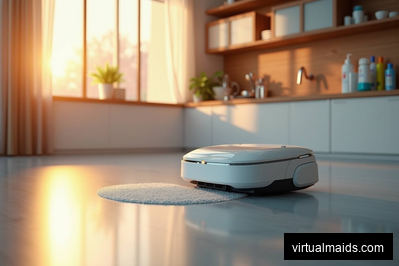
At the heart of robotic cleaning assistants is a blend of artificial intelligence and sensor technology. According to Dr. Henry Kautz, a professor of computer science at the University of Rochester, "the robots use a series of sensors to navigate and clean the room, avoiding obstacles and adjusting their paths as needed."
These sensors include laser scanners and infrared sensors that detect obstacles, a gyroscope for maintaining direction and orientation, and even cliff sensors to prevent the robot from falling off stairs. The data from these sensors is processed in real-time by sophisticated algorithms to optimize the cleaning path and ensure a thorough clean.
To truly understand the technology behind robotic cleaning assistants, it's essential to delve into the intricacies of their AI algorithms. These algorithms enable the robots to adapt and learn from their environment, improving their cleaning efficiency over time. For instance, some advanced models use machine learning to recognize different types of surfaces and adjust their cleaning techniques accordingly. Additionally, the sensor technology plays a crucial role in navigating obstacles and mapping out the cleaning area with precision. By grasping the nuances of these technologies, we can appreciate how far robotics has come in revolutionizing household chores.
Efficiency and Effectiveness
The efficiency of robotic cleaners is attributed to their ability to operate autonomously and adapt to different environments. A study by the University of Illinois found that robotic vacuums can clean a room in approximately half the time it takes a human to do so.
Furthermore, robotic cleaners are not prone to human errors like forgetting certain areas or not cleaning them thoroughly. They can reach under furniture and other hard-to-reach areas, ensuring a comprehensive clean. The i Robot Roomba, for example, uses a patented three-stage cleaning process to loosen, lift, and suction dirt, dust, and hair from your floors.
In the realm of digital marketing, the synergy between efficiency and effectiveness is paramount. Utilizing data analytics tools allows marketers to streamline campaigns, ensuring that resources are allocated where they can yield the most impact. For instance, A/B testing enables marketers to evaluate the effectiveness of different ad creatives in real-time, leading to data-driven decisions that optimize conversions. This data-driven approach not only enhances the efficiency of marketing strategies but also maximizes their overall effectiveness, resulting in higher ROI and improved customer engagement.
Practical Applications
Robotic cleaners are not just for vacuuming. The technology has expanded to include mopping robots, window cleaning robots, and even pool cleaning robots. The Hobot 298, for instance, uses ultrasonic water spray technology to clean windows effectively.
Moreover, these devices can be programmed to clean at specific times, offering convenience and saving valuable time for homeowners. According to a survey by the Consumer Technology Association, 79% of robotic vacuum owners said their device saves them time.
Beyond household chores, the practical applications of robotics are revolutionizing industries like agriculture. Autonomous drones equipped with sensors and cameras are being used to monitor crop health, detect pests, and even facilitate precision spraying of fertilizers. This innovative approach not only increases efficiency but also minimizes the environmental impact of traditional farming practices. Additionally, in the medical field, robotic surgical systems are enabling surgeons to perform intricate procedures with enhanced precision and minimal invasiveness, leading to faster recovery times for patients.
Challenges and Future Prospects
Despite their advantages, robotic assistants also have limitations. They can struggle with complex cleaning tasks like deep-cleaning carpets or navigating cluttered homes. Additionally, they can be expensive, with high-end models costing several hundred dollars.
However, the future of robotic cleaners looks promising. Experts predict advancements in AI and sensor technology will lead to even more efficient and versatile cleaning robots. As Dr. Kautz states, "We're on the cusp of seeing these robots move beyond vacuuming and mopping to performing a wider range of household tasks."
Looking ahead, one of the key challenges facing the robotics industry is ensuring the ethical use of AI-powered technologies. As these robotic assistants become more advanced, questions surrounding data privacy, algorithm bias, and job displacement arise. Balancing innovation with ethical considerations will be crucial for shaping the future prospects of this field. Additionally, the integration of robotics into healthcare holds immense potential. Imagine robotic assistants aiding in surgeries, providing remote patient monitoring, and even assisting in rehabilitation therapies. These future prospects not only offer efficiency gains but also raise important ethical and regulatory concerns that must be addressed.
Conclusion
In conclusion, the science behind efficient home cleaning with robotic assistants encompasses a blend of AI, sensor technology, and advanced algorithms. These devices offer significant benefits in terms of efficiency, effectiveness, and convenience, although they also have some limitations.
However, with ongoing advancements in technology, we can expect to see even more capable and versatile robotic cleaners in the future. As homeowners and technology enthusiasts, it's an exciting prospect to look forward to.
Expanding on the concluding remarks, it is essential to consider the long-term implications of integrating robotic assistants in household chores. These innovations not only streamline cleaning tasks but also have the potential to revolutionize the way we approach home maintenance. For instance, advanced sensors in robotic vacuums can adapt to different floor surfaces, ensuring thorough cleaning without manual adjustments. Moreover, incorporating AI technology allows these robots to learn and improve their efficiency over time, providing a truly personalized cleaning experience. In essence, the conclusion serves as a starting point for exploring the endless possibilities that arise from merging technology with everyday tasks.